




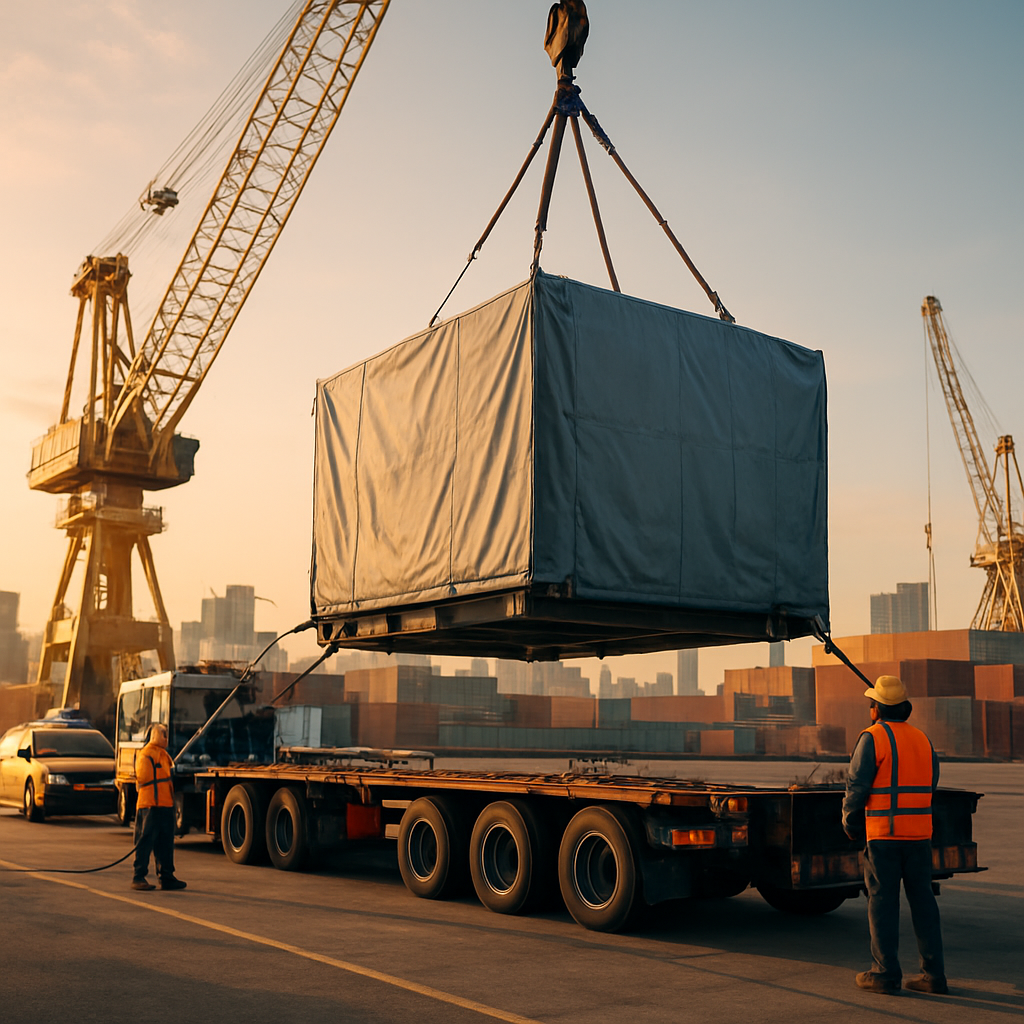
Understanding Project Logistics Services in the USA: A Guide
Understanding Project Logistics in the USA is now a boardroom issue for capital projects, as delays and cost blowouts increasingly trace back to planning gaps and fragmented supply chains. For project owners, EPCs, and procurement leaders, the right logistics strategy can make the difference between on-time commissioning and months of idle assets. This guide highlights seven reasons why you should treat Project Logistics in US as a strategic capability rather than an afterthought.
1. Strategic Planning Cuts Time and Cost Overruns
Major builds demand industrial logistics planning support from the earliest feasibility stage. Robust front-end planning aligns scope, timelines, and delivery windows with real-world port, road, and rail capacity. When logistics experts are at the table early, they can design integrated project supply chains that anticipate constraints, avoid double-handling, and reduce standing time for crews and cranes.
2. Advanced Route Engineering Protects Critical Paths
From remote wind farms to inner-city data centers, complex cargo routing solutions are now a defining risk factor. Detailed route surveys, bridge assessments, and community impact reviews ensure your heaviest modules can actually reach site when scheduled. Smart project cargo transportation strategies also build in contingencies, so a single washed-out road or permit delay doesn’t derail the entire construction critical path.
3. Multimodal Transportation Solutions Increase Flexibility
Heavy and oversized modules rarely move on a single mode of transport. Coordinated transportation solutions that blend road, rail, barge, and ocean legs create more options when ports are congested or trucking capacity tightens. Specialist operators deliver oversized equipment transport management that balances transit time, cost, and route safety, helping you keep installation teams productive instead of waiting on late arrivals.
4. Compliance and Risk Controls Safeguard Your Investment
Across the USA, local, state, and federal regulations can shift mid-project, exposing gaps in permits, escorts, or safety protocols. Providers that focus on risk-managed project freight build rigorous compliance frameworks, backed by live monitoring and insurance strategies. For additional context, the Federal Motor Carrier Safety Administration’s oversize guidance at https://www.fmcsa.dot.gov offers useful baseline requirements for heavy haul operations.
5. Seamless Global Movements via Expert Freight Forwarding
Many US projects rely on imported turbines, reactors, or modular skids that require specialized project freight forwarding. The right partner blends freight forwarding services with end-to-end logistics coordination, ensuring documentation, customs clearance, and port handling line up with your construction schedule. This reduces demurrage, storage fees, and the risk of critical equipment sitting stranded at the dock.
- Real-time visibility platforms that integrate milestones from factory to foundation.
- Control towers that coordinate multiple carriers, ports, and yards under one playbook.
- Data-driven supply chain management to forecast congestion and capacity risks.
- Scenario modelling for alternate routes and modes when disruptions occur.
- On-site teams aligning deliveries with lift plans, crew availability, and site access.
For owners planning high-stakes builds, expert Project Logistics in US support helps align budgets, timelines, and risk tolerances with real-world execution. When you’re ready to stress-test your upcoming project, compare providers on their complex cargo routing solutions, on-the-ground expertise, and ability to coordinate end-to-end logistics coordination across every phase. To protect your capital and schedule, enquire now to request a tailored logistics assessment and project-specific quote from a specialist team.

Related posts
China-to-U.S. Containership Bookings Jump 50%, Says Hapag-Lloyd
Containership bookings from China to the U.S. have shot up more than 50% this we

The Growth of 4PL Services in the US Logistics Industry
The logistics industry has undergone a seismic transformation over the past few
Building Success: Project Logistics Strategies for Construction Projects
In the dynamic realm of construction projects, the significance of project logis
