




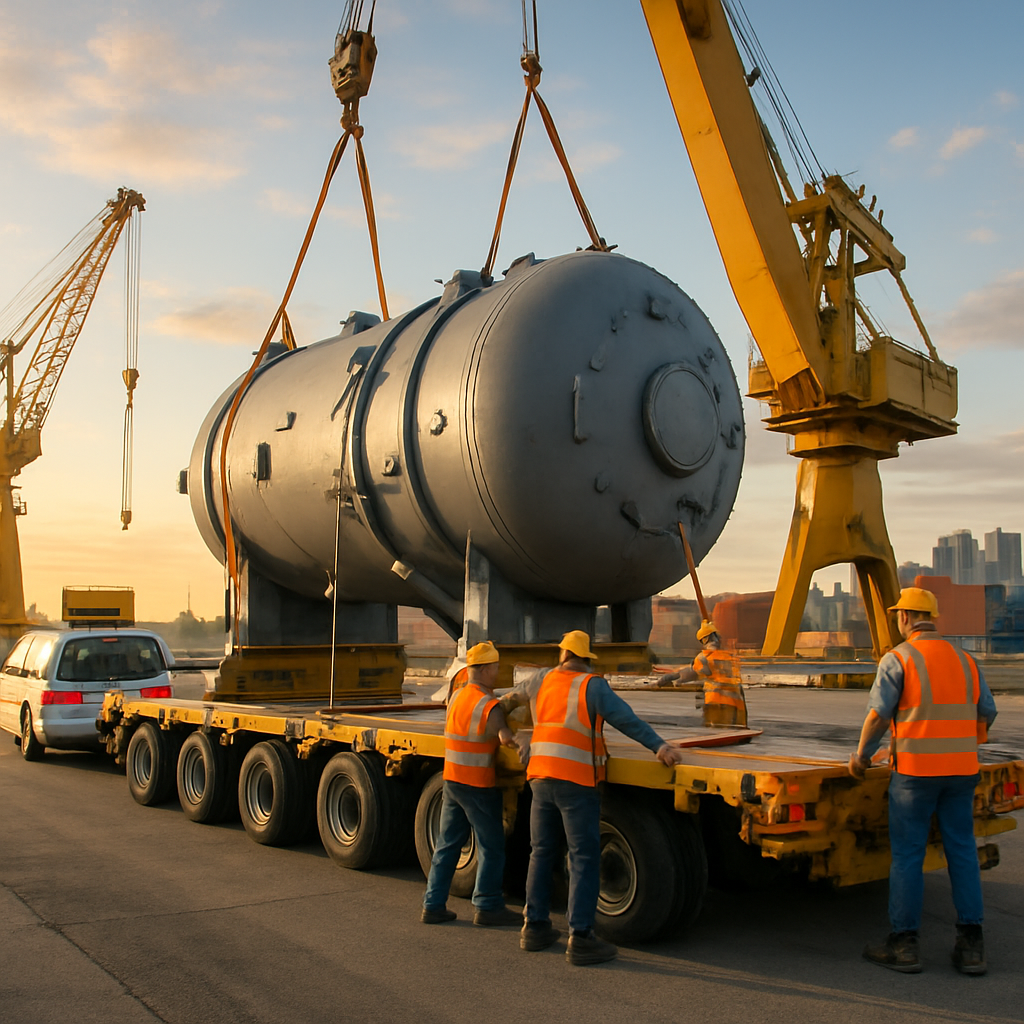
Industrial Project Freight: Essential Considerations for 2026
Industrial project freight planning for 2026 is entering a new phase of complexity. Tightening regulations, decarbonisation pressure, and fragile global trade routes are reshaping how US-based energy, infrastructure, and manufacturing projects move oversized cargo. For decision-makers evaluating Project Logistics in US, the stakes are high: missed permits, opaque data, or the wrong carrier mix can derail timelines, inflate budgets, and undermine stakeholder confidence.
1. Master Regulatory Compliance for Industrial Project Freight
By 2026, industrial project freight will be governed by tougher environmental, safety, and customs rules across federal, state, and local levels. Heavy-lift components crossing multiple states may require different escort, curfew, and axle-load conditions, while customs documentation for imported modules is under closer security scrutiny. Teams that still treat permitting as an afterthought risk costly laydowns and idle cranes. Embedding regulatory expertise into project supply chain planning from day one helps keep approvals aligned with fabrication schedules and site readiness.
2. Use Technology to Gain End-to-End Freight Visibility
Boards now expect real-time oversight across multimodal routes, not sporadic status emails from ports and carriers. IoT sensors, GPS devices and control-tower platforms can deliver end-to-end freight visibility for critical components, from factory gate to final lift. In practice, that means predictive ETAs, temperature and shock alerts, and dynamic dashboards connecting field teams, EPCs and suppliers. Companies that combine these tools with robust supply chain management analytics are better placed to re-route around weather events, congestion, or security incidents before they trigger schedule slippage.
3. Prioritise Low-Carbon Transport Without Sacrificing Schedule
Investors and regulators are pushing industrial projects to reduce transport emissions while maintaining viability. Shippers are looking harder at mode shifts to rail and barge where infrastructure allows, plus slow steaming and low-sulphur fuels for ocean legs aligned with International Maritime Organization guidance at https://www.imo.org. Route design now weighs carbon alongside cost and transit time, rewarding operators that offer customized industrial transport solutions. Clear reporting on CO2 per ton-mile is becoming standard in RFPs, making sustainability performance a differentiator when shortlisting project freight forwarding partners.
4. Build Risk-Managed Project Cargo Logistics and Insurance
Extreme weather, geopolitical shocks and port disruptions have exposed the fragility of long industrial corridors. For US project owners, risk-managed project cargo logistics means proactive scenario planning, pre-approved alternates for key ports and border crossings, and documented escalation protocols. Insurance programs also need updating: generic cargo policies may not reflect the replacement value of bespoke turbines or transformers, or the cost of site delays. Close coordination between logistics planners, insurers, and legal teams can ensure transportation solutions, waivers, and liabilities align with actual risk.
5. Choose an Integrated Project Logistics Partner for 2026
Few in-house teams have the capacity or field experience to manage engineering studies, heavy-lift supervision, and multimodal coordination alone. Increasingly, project owners rely on outsourced project logistics management that can deliver integrated logistics transportation from origin to site. The strongest partners bring proven industrial transportation strategies, on-the-ground port and route expertise, and digital control towers that support outsourced project logistics management decisions in real time. When evaluating freight forwarding services, look for evidence of risk-managed project cargo logistics and industrial transportation strategies, not just competitive day rates.
- Ask potential partners for recent case studies involving comparable weights, dimensions, and geographies.
- Check safety performance, lifting records, and incident history on similar industrial corridors.
- Assess digital maturity, including tracking tools, reporting, and integration with your project systems.
- Review how they approach project supply chain planning, contingency design, and carrier diversification.
- Confirm their capability to design and execute project-specific transportation solutions and oversight onsite.
Industrial project freight in 2026 will reward organisations that plan early, invest in data, and partner with specialists able to orchestrate complex moves. If you are scoping new energy, infrastructure, or manufacturing projects, now is the time to speak with experts who can align permitting, routing, and execution with your schedule and risk appetite. Engage a project logistics specialist today to request a tailored route study or feasibility review and turn your next industrial move into a controlled, predictable operation.

Related posts

Streamline Supply Chains with Air Freight Efficiency
Imagine you’re sending a letter to a friend across the globe. Would you ra
Expect More Asia-Europe Blanked Sailings as Rates Rise
It was just over a month ago that forwarders began to realise significant disrup

US CBP Cracks Down: SMEs Warned to Stay Compliant or Face Penalties
SME importers in the US are advised to budget for trade compliance as the Custom
