

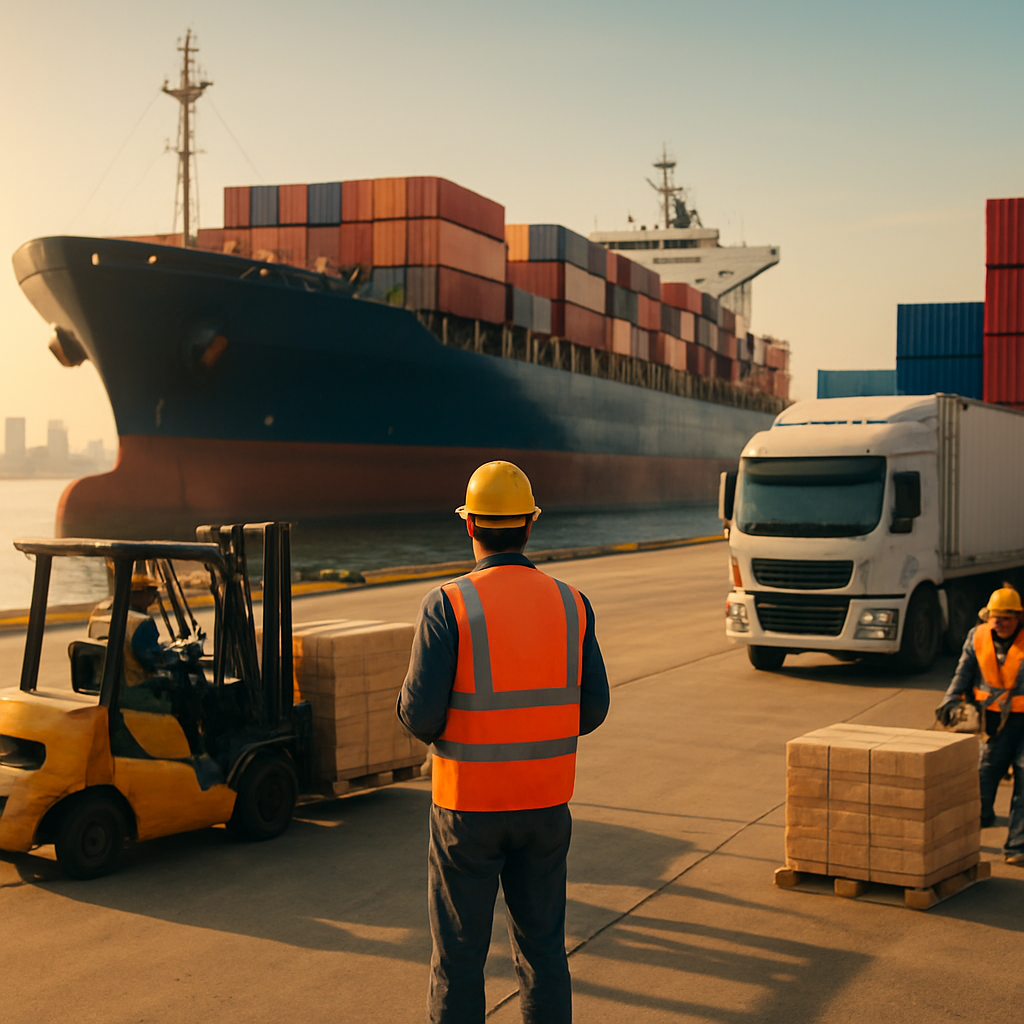
Door-to-Door Coastal Freight: Simplifying Your Logistics Needs
Door-to-door coastal freight logistics in the US is rapidly emerging as a viable alternative to long-haul trucking, promising shippers a blend of cost savings and sustainability gains. As businesses reassess their supply chains, many are exploring how coastal freight solutions can deliver lower emissions, congestion relief, and more predictable fuel efficiency, without sacrificing reliability. This listicle unpacks the key reasons to consider door-to-door coastal freight logistics in the US and the signals that it may be time to speak with a specialist about reshaping your domestic transport strategy.
1. Cost-Efficient Coastal Transport for Competitive Advantage
For cost-conscious supply chain managers, door-to-door coastal freight logistics in the US can reduce transport spend by up to 40 percent on select lanes compared with trucking. By shifting high-volume freight to water, operators can tap into economies of scale that road simply cannot match. This is especially compelling for heavy, non-urgent cargo where transit time is less critical than budget. Reviewing your current Domestic & Coastal in US mix can reveal lanes where moving from road to water unlocks immediate savings.
2. Major Emissions Cuts and ESG Reporting Benefits
Coastal vessels typically generate 60–80 percent less CO2 per ton-mile than trucks, helping shippers hit aggressive decarbonisation targets. For companies under pressure to report on climate risk and emissions, domestic coastal shipping services offer a practical pathway to reduce Scope 3 transport footprints. Those preparing sustainability reports or responding to investor scrutiny can use maritime moves to demonstrate measurable progress. External benchmarks, such as data from the International Maritime Organization at https://www.imo.org/, support the emissions case and strengthen ESG narratives.
3. Congestion Relief and Network Resilience
With highways growing more crowded, end-to-end coastal freight provides a relief valve that bypasses road bottlenecks and driver shortages. Using integrated port-to-door logistics can improve schedule reliability by avoiding peak-hour snarls and unpredictable dwell times. Shippers that diversify into interstate coastal freight options often find their networks become more resilient to regional disruptions, from storms to industrial action. This redundancy is increasingly seen as an insurance policy against volatility in domestic freight flows.
4. Strategic Use of Intermodal and Last-Mile Flexibility
Coastal shipping alone cannot reach every consignee, but when paired with local delivery options it becomes a powerful intermodal tool. Many operators now bundle coastal container delivery choices with rail and truck legs to provide true door-to-door interstate delivery. These integrated services can reduce handling, shorten handover windows, and maintain visibility through tracked coastal freight shipments. As more businesses seek Domestic & Coastal in US solutions, the ability to orchestrate multiple modes through a single provider is becoming a key decision factor.
5. When It’s Time to Talk to a Coastal Freight Specialist
Businesses moving steady volumes between major seaboard cities are prime candidates for cost-efficient coastal transport. If you’re facing rising diesel costs, unreliable transit times, or mounting ESG expectations, exploring coastal freight solutions can unlock both savings and reputational benefits. Companies that require predictable schedules, transparent reporting, and tailored interstate coastal freight options often gain most by partnering with a specialist that can design and manage integrated port-to-door logistics end to end.
- You ship regular volumes between US coastal hubs and want lower per-unit transport costs.
- Your stakeholders are demanding credible emissions reductions from domestic coastal shipping services.
- Highway congestion and delays are eroding delivery reliability and customer satisfaction.
- You need scalable, end-to-end coastal freight with strong tracking and reporting capabilities.
- You’re planning a logistics redesign and comparing coastal freight solutions with existing road-heavy networks.
If you’re reassessing your freight strategy and exploring tracked coastal freight shipments, now is the time to speak with a coastal logistics specialist. An expert can model lane-level savings, assess service trade-offs, and design integrated port-to-door logistics that align with your cost, reliability, and sustainability targets. Request a tailored coastal freight assessment today to identify where door-to-door coastal freight logistics in the US can deliver the greatest impact on your network performance and bottom line.

Related posts
The Rise of Domestic Sea Freight: What Businesses Need to Know
Explore how domestic sea freight is reshaping US logistics, the risks of road-he
Biofuel Supply Framework in Development
Currently, Singapore-based Global Centre for Maritime Decarbonisation (GCMD) are