




U.S. Sea Freight in 2026: How Global Shipping Disruptions Are Forcing Route Changes
In 2026, global shipping is no longer operating under normal assumptions. What used to be a straightforward question of cost and distance has become a more complicated calculation shaped by conflict, canal access, fuel volatility, and shifting trade policies. As a result, shipping disruptions 2026 is more than just a trending phrase. It reflects a real change in how sea freight routes are planned and managed.
For the United States, these disruptions are not happening at a distance. They affect import schedules, export planning, product availability, and consumer prices. Some cargo that once moved through traditional corridors is now being redirected onto longer but safer routes. In other cases, shippers are using alternative passages that had recently been avoided. The bigger story is not just that delays are happening. It is that global shipping networks are being reshaped in real time.
Quick Takeaways
- Global shipping in 2026 is being reshaped by geopolitical risk, canal access, and trade policy changes.
- Carriers are increasingly choosing longer but safer routes to reduce uncertainty.
- The United States is feeling these changes through higher costs, unstable schedules, and shifting port demand.
- The Panama Canal is once again becoming an important option for selected U.S. trade flows.
- Route changes are affecting more than transit times. They are also influencing insurance, fuel costs, and supply chain planning.
- Businesses that adapt best are focusing on flexibility, visibility, and route diversification.
Why 2026 Feels Different From Earlier Freight Shocks
Shipping has faced major disruptions before, but 2026 feels different because instability is no longer seen as temporary. Instead of waiting for conditions to return to normal, carriers and shippers are now planning for disruption as an ongoing reality.
In earlier freight crises, the expectation was that once a major issue passed, shipping patterns would stabilize. That is no longer the case. Today’s supply chains are deeply interconnected, and problems in one region can quickly affect routes, schedules, and pricing elsewhere. A security issue near a major chokepoint, for example, can ripple across multiple trade lanes and impact delivery times far from the original source of the problem.
That is why shipping disruptions 2026 is not just about isolated delays. It reflects a broader shift in how the global freight system works. The focus is no longer only on moving cargo quickly. It is now about moving cargo predictably under uncertain conditions.
The Three Main Pressures Changing Sea Freight Routes
Several overlapping forces are driving route changes in 2026, but three stand out most clearly.
- Middle East Security Risks
One of the biggest pressures comes from instability in and around the Middle East. Key maritime chokepoints in the region are essential to global trade, especially for energy and container shipping. When security deteriorates, carriers are forced to reassess whether the shortest route is still the safest one.
That has led to vessels avoiding traditional corridors and taking longer alternatives instead. While this helps reduce exposure to immediate risk, it also increases voyage length, fuel consumption, and scheduling complexity.
- Changing Canal Dynamics
The Panama Canal has regained strategic importance in 2026. After recent years of restrictions and operational pressure, it is once again serving as an important route for selected cargo flows, especially when speed matters more than overall cost.
This has created an unusual situation: a route that was recently associated with delays is now being used as a faster alternative in certain cases. It shows how quickly shipping priorities can change when the risk profile of other routes worsens.
- Rising Policy and Regulatory Costs
Route decisions are also being influenced by policy. New maritime-related fees and trade actions are changing how carriers calculate costs. These measures may not affect every shipment equally, but they still influence vessel deployment, pricing, and route selection.
In 2026, shipping routes are being shaped not only by geography and security, but also by regulation and cost exposure. That makes the market more complex and less predictable than it appears on the surface.
How U.S. Sea Freight Routes Are Being Redrawn
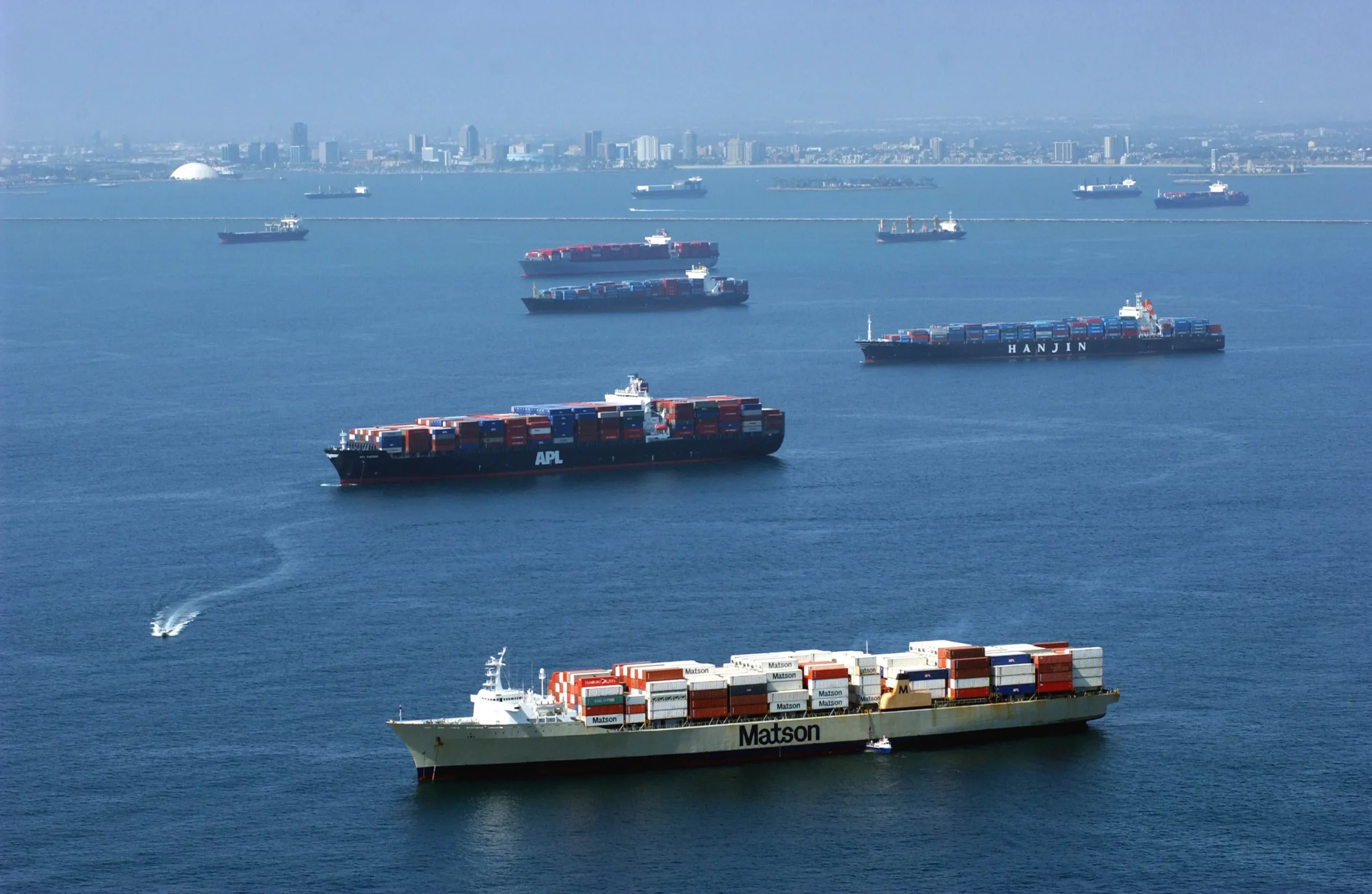
The clearest sign of change is the growing use of longer diversion routes. Cargo that once moved through shorter corridors is now being routed around southern Africa in order to avoid high-risk areas. This is not a small operational adjustment. It affects the entire shipping chain, from transit times and fuel costs to container availability and port scheduling.
For the United States, the effects depend on the cargo type and destination. East Coast flows can be affected when global services are redrawn and vessels arrive later than planned. Gulf Coast routes are becoming more important for certain energy shipments and trade movements that benefit from access to the Panama Canal. West Coast activity also remains important, but no lane now operates in complete isolation from global disruption.
Why Longer Routes Can Still Be the Better Choice
At first glance, rerouting a ship onto a longer path sounds inefficient. But in 2026, the shortest route is not always the best route.
A route may look efficient on a map, but if it comes with a high risk of delay, suspension, or sudden surcharge, it can become the less practical option. That is why carriers are sometimes choosing longer routes that offer greater operational certainty. A voyage that takes more days may still be more reliable if it avoids the risk of disruption halfway through transit.
This reflects a deeper change in logistics planning. Carriers are no longer optimizing only for transit time. They are optimizing for overall reliability. In a volatile environment, consistency matters more than theoretical speed. For shippers and consumers alike, a stable arrival window can be more valuable than the fastest possible route.
The Cost Impact of Route Changes
When shipping routes change, the effects are not limited to transit maps. They show up directly in costs.
A longer voyage typically means more fuel consumption. A riskier voyage can increase insurance costs. Routes affected by instability may also attract emergency charges or special surcharges. On top of that, policy-related costs can raise the total price of moving cargo even further.
This is one reason freight markets can feel inconsistent in 2026. In some lanes, headline rates may not look unusually high. But when the full cost of rerouting, risk management, scheduling uncertainty, and added fees is taken into account, the overall burden on the supply chain remains significant.
For businesses, this creates budgeting challenges. For consumers, it can lead to higher prices or less flexibility in how products are stocked and sold. In short, route changes affect more than ships. They affect the entire cost structure behind global trade.
What This Means for U.S. Importers, Exporters, and Consumers
For importers, the biggest challenge is uncertainty. The question is no longer just whether cargo can be booked. It is whether the schedule being offered can be trusted. Longer voyages, changing port calls, and service reshuffling all make planning more difficult.
For exporters, the concern is competitiveness. When routes become less predictable or more expensive, U.S. products can become harder to move efficiently into overseas markets. This matters especially in sectors where timing and freight cost directly affect buyer decisions.
Consumers may not always notice the effects immediately, but they are still real. Route changes can increase logistics costs, reduce inventory flexibility, and place pressure on pricing. Not every disruption leads to empty shelves, but many lead to quieter forms of strain such as delayed restocks, narrower promotional windows, or more cautious inventory planning.
Which U.S. Ports and Lanes Matter Most Right Now
Certain U.S. trade gateways are becoming more strategically important as shipping patterns shift.
The Gulf Coast is drawing attention because of its role in cargo flows that benefit from access to the Panama Canal. As route priorities change, this region becomes more valuable for certain trade movements, especially those that need a faster alternative to longer global detours.
The East Coast also remains critical. It is closely tied to the effects of global service reshuffling, especially when changing vessel schedules ripple across multiple trade lanes. Delayed arrivals and altered service patterns can affect port operations and inland planning far beyond the shoreline.
What matters most is not just which port is busiest, but which ports can adapt effectively as routing logic changes. In 2026, connectivity, timing, and flexibility matter more than simple volume rankings.
How Carriers Are Adapting
Carriers are responding to disruption in several ways.
First, they are rerouting vessels when a corridor becomes too risky or too unpredictable. This is the most visible change, and it has become more common as security concerns persist.
Second, they are developing workarounds that combine sea and inland transport in new ways. Instead of relying entirely on one traditional route, some operators are building hybrid solutions that move cargo through alternative ports and inland links before reconnecting to ocean services.
Third, they are adjusting commercial terms to reflect uncertainty. This includes changes in pricing, surcharges, and contract strategies. The goal is not only to recover costs, but also to create more room to respond when conditions shift again.
Together, these responses show that ocean shipping in 2026 is no longer defined by fixed patterns. It is defined by ongoing adjustment.
What a Resilient Sea Freight Strategy Looks Like in 2026
A resilient shipping strategy in 2026 starts with one basic assumption: conditions can change quickly.
That means businesses need more than a low-cost route. They need options. A stronger strategy may include spreading volume across different carriers, allowing more lead time where possible, and using alternative gateways before disruption becomes severe. Visibility also matters more than ever. Companies that can track changes early are in a better position to adapt before delays turn into larger operational problems.
The broader lesson is clear. Resilience is no longer a backup plan. It is now a core requirement. In a year shaped by instability, the most effective freight strategies are the ones built for flexibility from the start.
Conclusion
In 2026, shipping disruptions 2026 is reshaping sea freight routes in ways that affect businesses and consumers alike. Global shipping is being pushed by security risks, changing canal access, higher operating costs, and new policy pressures. For the United States, that means more than delayed cargo. It means a freight system that is actively redesigning itself in response to uncertainty.
The old model of choosing the shortest and cheapest path is giving way to a new one based on reliability, flexibility, and risk management. As long as these pressures remain in place, route changes will continue to shape how goods move in and out of the country. The companies that respond best will be the ones that plan for disruption instead of waiting for it to pass.
FAQs
- Why are sea freight routes changing so much in 2026?
Sea freight routes are changing because carriers are responding to security risks, canal conditions, rising costs, and policy changes. Instead of relying on fixed patterns, they are choosing routes based on current risk and reliability.
- Are shipping disruptions 2026 only about conflict zones?
No. Conflict is a major factor, but it is not the only one. Canal access, regulatory costs, fuel prices, and network imbalances are also shaping shipping conditions in 2026.
- Why would a longer route be better?
A longer route can be more dependable if it avoids unstable areas or reduces the risk of delay. In many cases, reliability is now more important than taking the shortest path.

Related posts

Cutting Carbon Emissions For the Shipping Industry Remains a Struggle
Cutting carbon emissions remains a struggle as sea shipping operators are under
Container Shortage Affecting Indian Exporters, Causes Unrest
Apart from rocketing freight rates, Indian exporters face another supply chain c
The Growth of 4PL Services in the US Logistics Industry
The logistics industry has undergone a seismic transformation over the past few
