




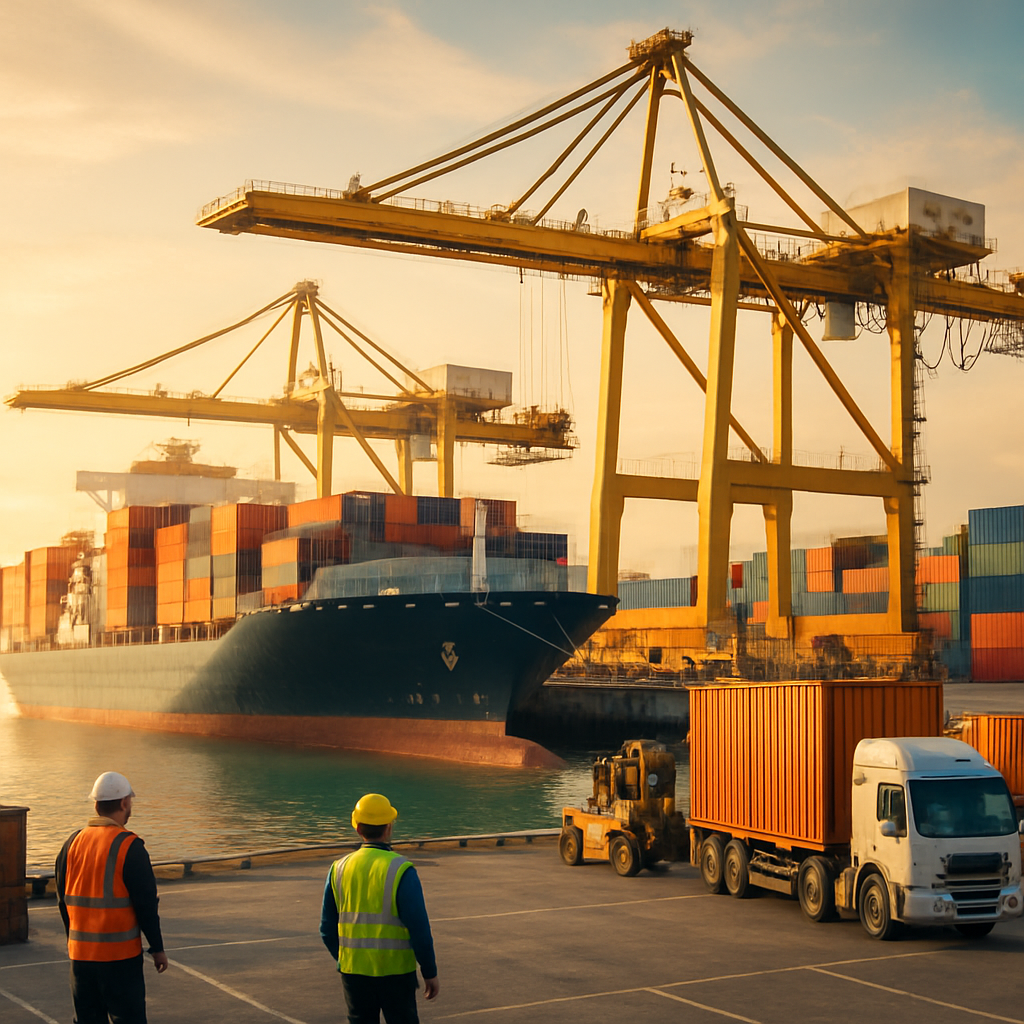
Door-to-Door Sea Freight: Simplifying Logistics in 2026
Door-to-door sea freight is reshaping how US importers and exporters move goods in 2026, giving logistics managers a practical way to tame complexity while protecting service levels. With schedule reliability on key trades stuck near 50% and delays stretching past four days on some Asia–US lanes, integrated services help teams move from firefighting to planning. By combining Ocean shipping logistics, inland transport, and customs under one roof, door-to-door solutions create a single, accountable flow that supports growth instead of draining capacity.
1. Door-to-door sea freight reduces coordination overload
Managing separate truckers, carriers, customs brokers, and warehouses for every container magnifies the risk of errors and cost creep. A door-to-door provider handles pickup, port handling, ocean leg, deconsolidation, and final delivery under one service agreement. That cuts back-and-forth emails, duplicated status checks, and disputes over who caused a delay. For smaller teams, shifting to Sea Freight in US via an integrated model is often the trigger that frees operations leaders to focus on network design, not daily firefighting.
2. End-to-end visibility cuts delays and surprises
When vessels run late and ports clog, fragmented tracking makes it hard to see the full impact on inventory and customer commitments. Leading providers knit together tracking visibility for sea freight and inland legs into a single dashboard, so your team does not juggle multiple portals and spreadsheets. Early alerts on schedule changes, congestion, or customs inspections give you time to re-sequence production or adjust delivery promises. This level of insight is vital for retailers and manufacturers running lean stock levels.
3. Integrated customs support lowers compliance risk
Missteps in the Customs documentation process remain a major cause of holds, penalties, and surprise fees at US gateways. Door-to-door operators increasingly bundle licensed brokerage, data validation, and tariff advice into their service. That support can streamline import customs paperwork steps and export customs clearance workflow, reducing the odds of misclassified HS codes or incomplete safety filings. The Federal Maritime Commission’s guidance on ocean transportation intermediaries at https://www.fmc.gov/ocean-transportation-intermediaries/ is a useful reference when assessing potential partners.
4. Predictable costing simplifies budgeting
Volatile spot rates and scattered suppliers make it hard to calculate landed cost with confidence. Door-to-door container shipping replaces a patchwork of accessorials with a single, door-delivered price aligned to Incoterms such as DAP or DDP. That structure clarifies what is included, from drayage and chassis to basic customs services, and where surcharges may apply. For finance and sales teams, this stability supports cleaner margin planning and more accurate quoting, especially on new trade lanes or seasonal programmes.
5. One accountable partner improves resilience
When ports close, storms hit, or equipment runs short, the weakest point in a fragmented chain often breaks first. With a single door-to-door provider, there is no debate over who owns which problem or which contracts allow a change. Your partner can redesign sea freight routing options, pull forward alternative container shipping options, or shift to secondary ports without restarting negotiations. That agility across end-to-end ocean logistics is quickly becoming a differentiator as networks remain stressed through 2026.
6. When you should consider expert support
Repeated demurrage, rolled bookings, and growing write-offs are strong signs that your current international cargo logistics planning model is under strain. The same applies if sales teams are flagging missed delivery windows or if operations is drowning in containerized freight documentation for every shipment. A seasoned door-to-door specialist will assess your flows, identify where handoffs fail, and propose a programme that matches your risk tolerance and growth plans. To stabilise costs and service, consider booking a consultation with a logistics expert who can tailor a door-to-door sea freight solution to your network.
- Clarify your current shipment volumes, key trade lanes, and service issues before engaging providers.
- Ask how each provider manages tracking, exceptions, and communication across all legs.
- Compare how pricing structures handle fuel, accessorials, and potential disruption-related rerouting.
- Review their experience with your commodity types and high-risk ports or corridors.
- Schedule a consultation to map a pilot lane and validate performance before scaling network-wide.
If your team is ready to move from reactive shipment management to a more resilient, data-driven supply chain, now is the time to explore a door-to-door sea freight partnership and request a tailored quote or consultation.

Related posts
The Big Splash: Impact of Mega Container Ships on Sea Freight
In the vast expanse of sea freight, a colossal wave has emerged – Mega Con
Disruptions Impact Shipping Outlook
Ship backups that plagued seaports during the Covid pandemic are making a comeba

Disruption Warning for Roads, Trains, Ports Due to Pro-Palestine Protests
Police and shipping operators are bracing for parts of the city and the Port of
