




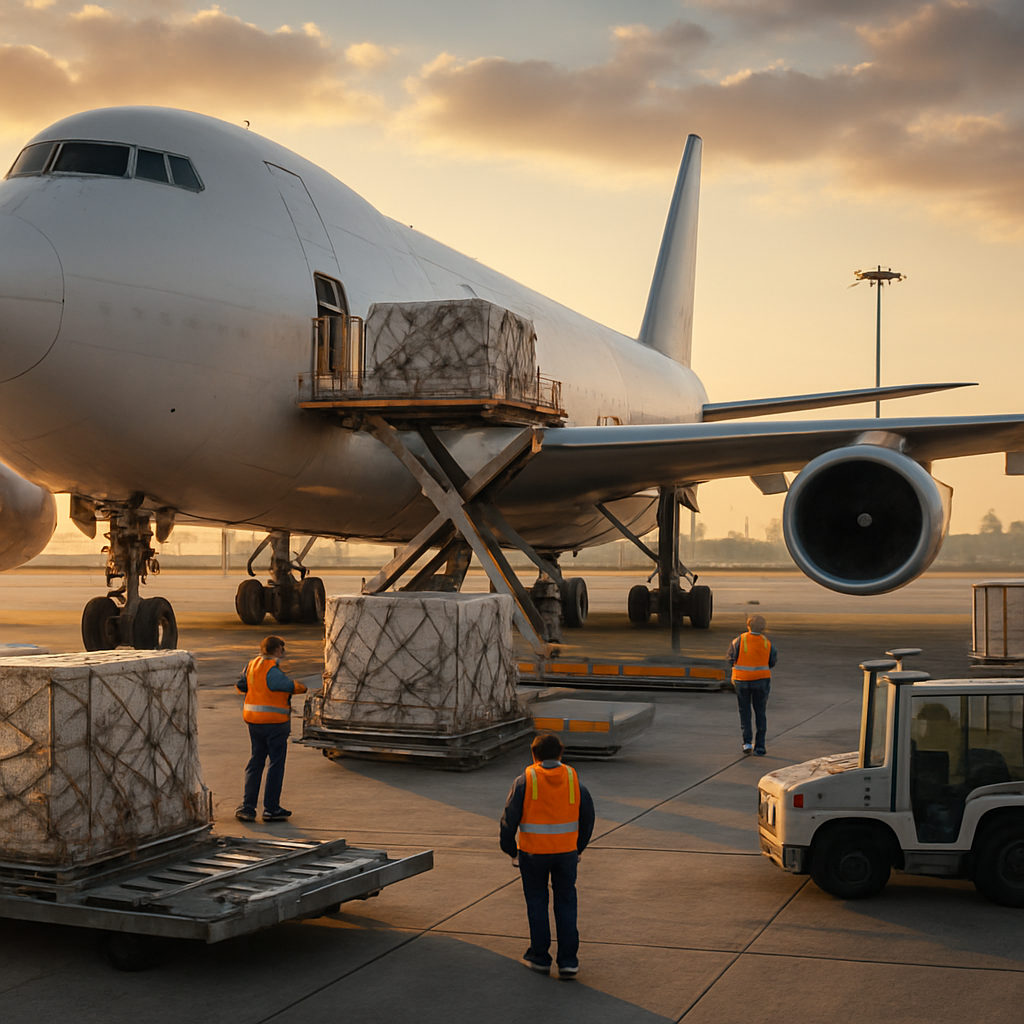
Dedicated Aircraft Charter Freight: What You Need to Know in 2026
US companies under pressure to move inventory faster are turning to dedicated aircraft charter freight as a seeming safety valve. Yet behind the headlines about soft capacity and an oversupplied market, many decision-makers are missing the mounting operational and financial risks tied to Air freight in the US. In 2026, assuming charter capacity will always be plentiful and affordable can quietly erode margins, undermine service promises, and expose shippers to avoidable disruption.
- Repeated last-minute charters that mask planning and inventory problems.
- Escalating logistics costs per unit without clear visibility into drivers.
- Empty space on aircraft due to rushed bookings and poor consolidation.
- Regulatory, insurance, and dangerous goods missteps that cause delays.
- False confidence created by headline capacity statistics that ignore lane-level constraints.
Why Air Freight in the US Charters Are a Growing Blind Spot
Charter flights still represent a small share of overall global air cargo shipping, but they carry outsize risk because they are reserved for the most time-sensitive, high-value loads. As networks evolve and scheduled capacity swings week to week, many US shippers find themselves quietly leaning on charters as a backstop. What looks like tactical agility can actually be a structural dependency on urgent shipment logistics that is poorly measured and rarely challenged at the executive level.
How Market Oversupply in 2026 Can Mislead Shippers
Forecasts of soft demand and lower load factors in 2026 tempt supply chain teams to relax, assuming aircraft will be available whenever they need them. Industry data, including IATA’s market analysis at https://www.iata.org/en/publications/store/air-cargo-monthly-analysis/, shows that global averages hide sharp regional and seasonal spikes. During weather events, strikes, or geopolitical disruptions, capacity on specific lanes can vanish overnight, driving volatile air charter pricing breakdown dynamics that rarely appear in annual budgets.
Warning Signs You’re Using Charters for the Wrong Reasons
Common early indicators include widening gaps between promised and actual delivery times, more frequent rush delivery air freight bookings, and finance teams questioning why logistics costs are outpacing revenue growth. Operations leaders may also notice rising exceptions tied to dangerous goods formalities, airport cut-off times, or international air freight costs. These symptoms often trace back to weak demand planning, thin safety stocks, and fragmented supplier communication, rather than any genuine need for constant emergency lift.
Operational and Financial Risks That Stay Hidden
When charters become a default escape hatch, utilisation and route efficiency suffer, and the true air freight pricing factors behind each decision get lost. Ad hoc flights may depart with significant unused volume simply because there was no time to coordinate cross-border air freight planning or consolidate with partners. Over time, these patterns can distort network design, obscure the real cost of service, and leave companies dangerously exposed when they attempt larger international cargo shipping projects under similar assumptions.
To avoid these traps, shippers should review recent charter activity, map root causes, and test whether their time-critical shipment coordination processes match 2026 realities. A structured audit of urgent air freight logistics, expedited international cargo usage, and carrier agreements can reveal where charters are essential and where they are an expensive band-aid. Before the next disruption forces another scramble, assess your exposure and speak with an air logistics specialist who can benchmark your current approach and help redesign a more resilient strategy.

Related posts
Cargo operations at Brazil’s Guarulhos Airport near collapse
Cargo operations at Latin America’s largest air cargo gateway, Sao Paulo’s G

E-commerce Takes Flight: The Role of Air Freight in Online Shopping
In the rapidly evolving world of online shopping, the interplay between technolo

Air Freight Safety: Mitigating Risks in Transportation
Air freight plays a crucial role in global trade and logistics, providing swift
