




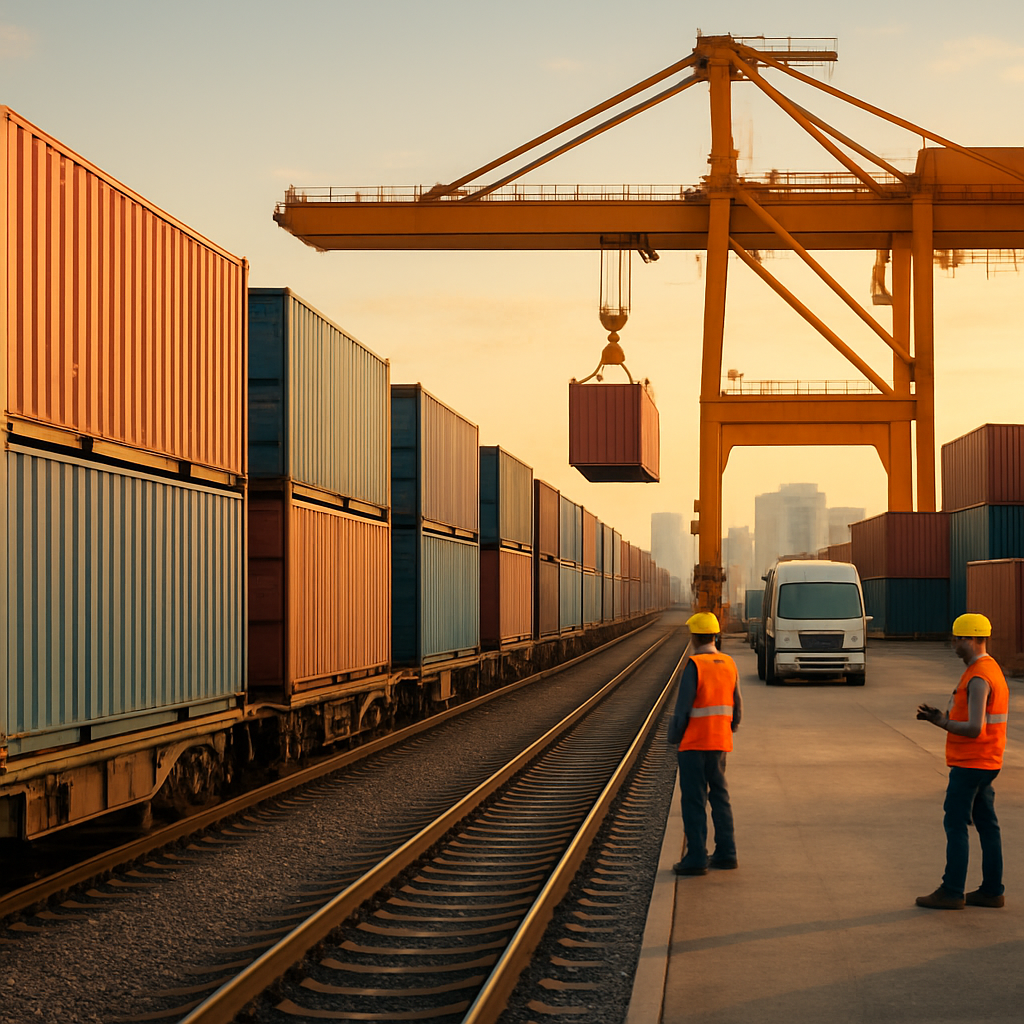
Container Rail Freight in 2026: What You Need to Know
By 2026, the outlook for container rail freight and intermodal trends in the US will hinge on how quickly shippers recognize emerging risks in a changing market. Many operators still treat intermodal as a backup rather than a strategic tool, overlooking structural shifts in demand, technology, and emissions policy. This blind spot can quietly erode margins and service reliability. As networks grow more complex and customer expectations tighten, ignoring these changes could leave supply chains exposed to disruption and higher long-term costs.
- Rising expectations for tracking and visibility across intermodal networks
- Underutilised potential for cost-effective rail shipping services in dense corridors
- Operational bottlenecks caused by outdated yard and terminal processes
- Escalating pressure to cut emissions from freight transportation solutions
- Misaligned rail and road schedules undermining delivery reliability
Container rail freight in US: the hidden vulnerability
For many shippers, Rail Freight in US remains an under-analysed component of logistics and supply chain planning. Rates may look attractive, but the real risk lies in variability: congestion at key hubs, inconsistent handoffs with trucking, and limited contingency planning. When volumes spike or weather hits, these weak points surface quickly. Companies that lack clear rail freight transportation strategies often discover too late that their intermodal capacity, routing, and service assumptions were overly optimistic.
Technology gaps and intermodal blind spots
The industry is rapidly adopting IoT, automation, and data analytics, yet many networks still operate on fragmented systems. This disconnect can leave decision-makers without near real-time insight into container status or lane performance. Without integrated freight logistics tools, it is difficult to compare domestic intermodal shipping options against trucking in a dynamic way. The result is ad hoc mode shifting, reactive problem-solving, and missed opportunities to lock in more resilient intermodal shipping services across major corridors.
Emissions pressure and sustainability risks
Rail’s emissions advantage over trucking is well documented by sources such as the U.S. Environmental Protection Agency at https://www.epa.gov/smartway. Yet relying on this inherent benefit alone is no longer enough. Regulators, investors, and major buyers are demanding verifiable, year-on-year reductions. Without sustainable freight logistics planning, businesses may struggle to prove progress, especially as cleaner engines and alternative fuels reshape benchmarks. Failing to quantify and optimise rail-focused supply chain optimization could expose firms to reputational and compliance risks.
Operational warning signs to watch
Several patterns indicate that container rail strategies are falling behind. Persistent demurrage at intermodal terminals, frequent mode-switching at the last minute, or recurring service failures on long-distance intermodal freight corridors all suggest deeper issues. Teams that spend more time firefighting than analysing performance may lack the data and processes to support end-to-end logistics solutions. Over-reliance on historical schedules, instead of live network insights, also limits the ability to design truly cost-effective rail shipping services that can withstand disruption.
By 2026, the gap between advanced and lagging networks will widen. Organisations that treat container rail freight as a strategic asset, not a commodity, will be better placed to capture value from intermodal shipping services and evolving freight transportation solutions. Now is the time to audit your current rail exposure, challenge long-held assumptions, and assess whether your integrated freight logistics approach can support the next stage of growth. Consider speaking with an expert to review your rail footprint, stress-test your scenarios, and identify practical upgrades before today’s inefficiencies become tomorrow’s lost market share.

Related posts
Cargo on Rails: Maximizing Efficiency in Rail Freight Operations
In the dynamic world of logistics, efficiency is the cornerstone of success. Whe
Impact of E-Commerce Growth on Logistics Companies
The impact of e-commerce growth on Logistics companies in recent years has been
Intermodal Rail Freight: The Future of US Shipping in 2026
Explore how intermodal rail freight in US is reshaping long-haul shipping in 202
