




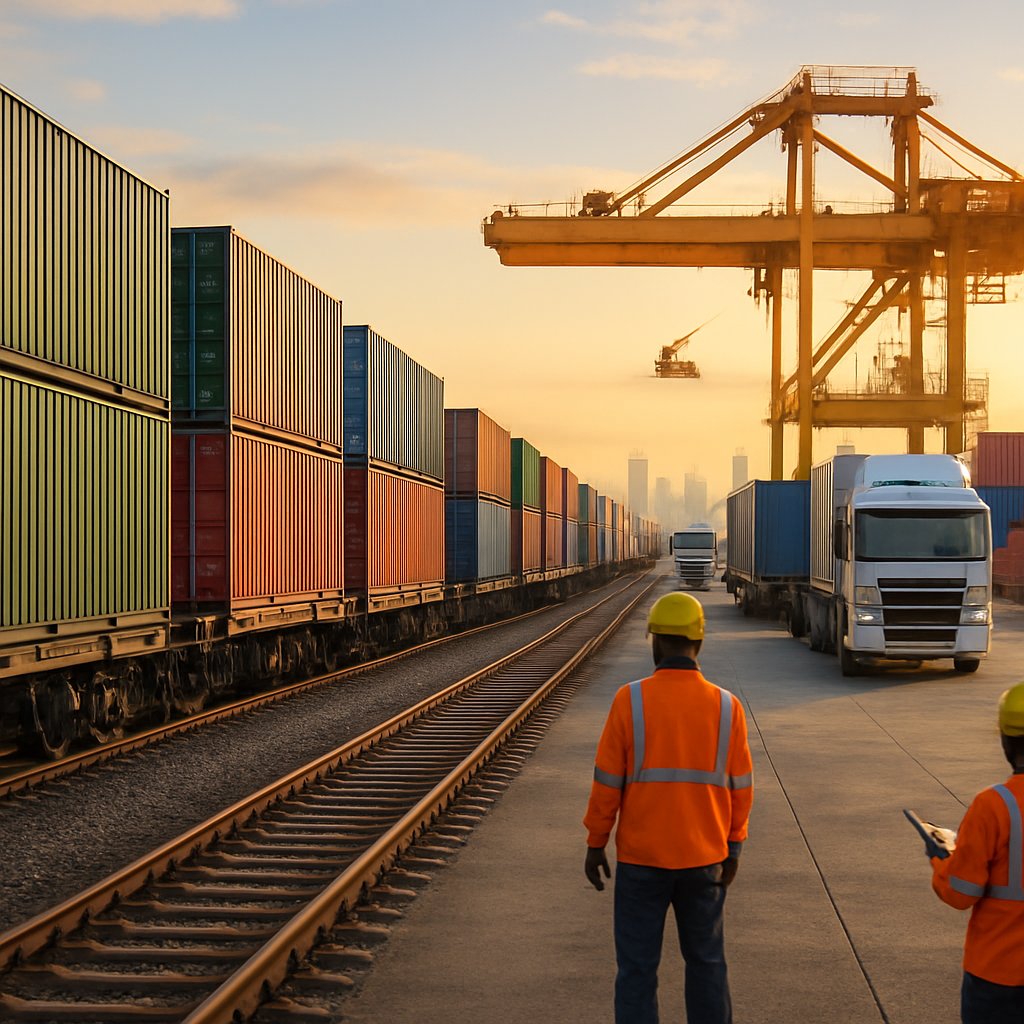
Domestic Rail Freight Shipping: Key Trends for Businesses in 2026
Domestic rail freight shipping is entering 2026 as a strategic lever for shippers under pressure from volatile trucking capacity, tighter emissions expectations, and ongoing disruption risk. As rail volumes and intermodal flows recover, US businesses are rethinking how Rail Freight in US fits into long-term freight transportation solutions rather than treating it as a tactical backup. The organisations that move first will lock in more resilient, lower-emission networks while competitors continue to firefight.
In 2026, rail is no longer simply a cheaper alternative to trucks; it is becoming the structural backbone of high-performing, low-carbon domestic freight networks.
For executives overseeing logistics and supply chain strategy, the central question is no longer “Should we use rail?” but “Which corridors, commodities, and customers should be rail-first by design?”
Domestic Rail Freight Shipping: Key Trends for Businesses in 2026
Three structural shifts define the current rail landscape: the rise of intermodal shipping services, a data-driven focus on reliability, and the integration of sustainability into procurement decisions. Intermodal rail shipping services now underpin many national networks, with rail handling long-haul moves and trucks providing agile first and final mile. This integrated truck and rail shipping model is reshaping how shippers benchmark cost, service, and risk across modes.
Data, Automation, and Sustainability Redefine Rail Strategy
Regulators are pushing for richer, standardised performance data, allowing shippers to compare rail freight transportation options lane by lane instead of relying on anecdotes. Leading teams combine Surface Transportation Board metrics with TMS data to understand dwell, velocity, and variability, then adjust buffer stock and service promises accordingly. At the same time, automation in yards and terminals is transforming domestic logistics and rail supply chains, but only when paired with disciplined process redesign and cross-carrier collaboration.
As corporates adopt science-based climate targets, rail-based transportation solutions are moving from “nice to have” to mandatory in RFP scorecards. With rail moving a ton of freight many hundreds of miles per gallon, mode choice is now a core decarbonisation decision, not a side calculation. Shippers that proactively migrate long-distance intermodal freight and heavy commodities onto rail can reduce emissions and stabilise budgets simultaneously, especially when supported by cost-effective freight logistics planning across their wider network.
Forward-looking leaders treat rail as a partnership, not a utility. They stress-test critical lanes for labour or regulatory disruption, build playbooks to pivot between modes, and focus on rail logistics and supply chain efficiency instead of chasing the lowest spot rate. In 2026, the competitive edge will go to companies that embed domestic rail freight shipping into network design, governance, and board-level risk conversations. Now is the time to review your modal mix, quantify the upside, and align with expert advisors to build a rail-first roadmap that fits your customers, markets, and growth ambitions.

Related posts
Cargo on Rails: Maximizing Efficiency in Rail Freight Operations
In the dynamic world of logistics, efficiency is the cornerstone of success. Whe
A Shipper’s Guide to Rail Freight Logistics in the USA
Rail freight logistics in the United States is a crucial component of the nation
More China Links Don’t Compensate for Russian Railways’ Lost Traffic
A new Volgograd-Zhejiang rail connection is the latest post-Ukraine invasion mov
