




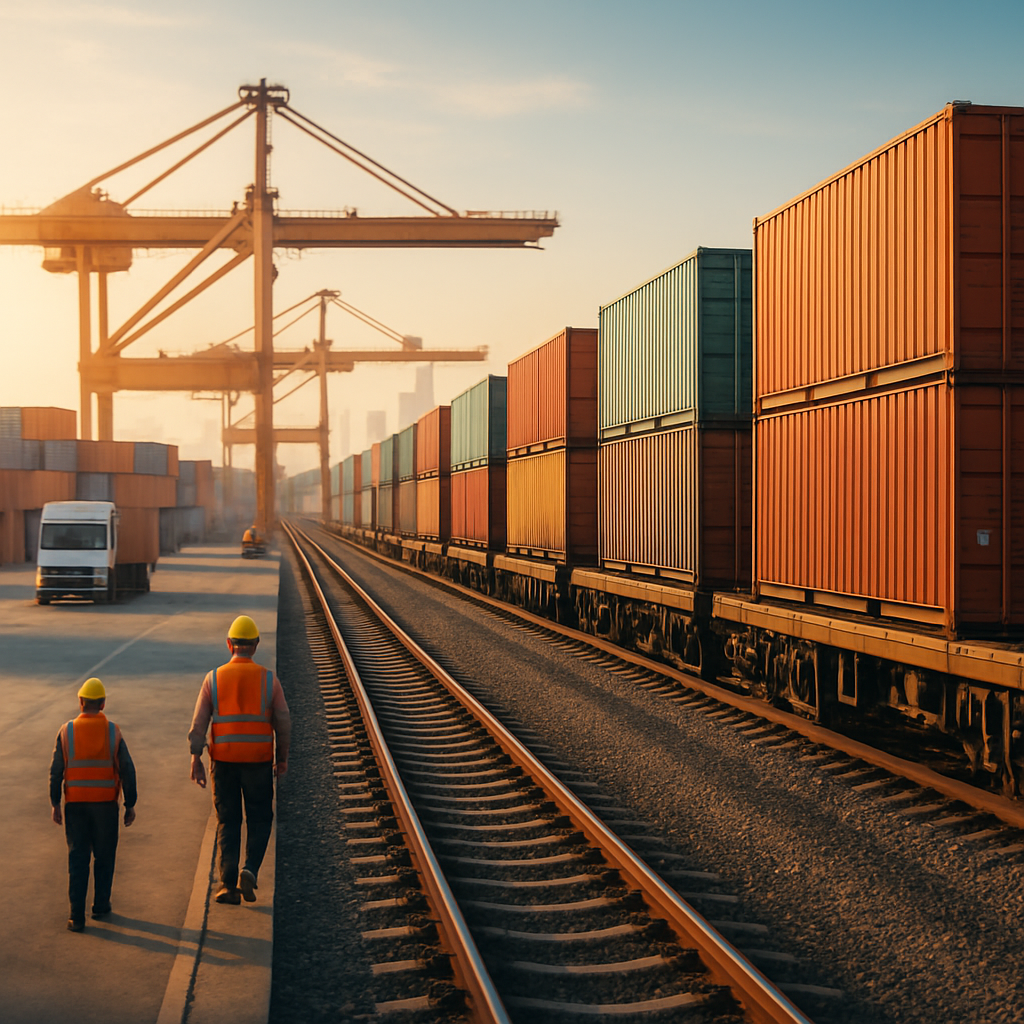
Port Rail Services: Enhancing Freight Movement in 2026
Port rail services are rapidly becoming a strategic advantage for shippers looking to move containers more efficiently across the United States. As 2026 approaches, investment in Rail Freight in US corridors is reshaping how importers, exporters, and domestic manufacturers plan their freight transportation solutions. For logistics teams under pressure to cut costs, improve reliability, and reduce emissions, understanding what’s changing at major gateways is now a core part of supply chain decision-making.
1. Faster Ship-to-Rail Transfers Through On-Dock Rail
New and expanded on-dock rail infrastructure allows containers to be lifted directly from vessels onto trains, bypassing long truck queues and congested terminal roads. This reduces dwell times, cuts drayage costs, and improves schedule reliability for time-sensitive freight. Ports that streamline handoffs between stevedores, terminal operators, and railroads give shippers a clearer view of transit times and capacity. For many cargo owners, faster transfers make intermodal shipping services a more compelling alternative to long-haul trucking.
2. Inland Port Terminals Extending Port Capacity
Inland port terminals connected by dedicated rail services are pushing port capacity deeper into the interior. Facilities modelled on projects like the Blue Ridge Connector give shippers access to customs clearance, container storage, and cross-docking closer to factories and distribution centres. This reduces highway exposure and can shorten last-mile delivery legs. Manufacturers and retailers seeking integrated freight logistics gain more flexibility to rebalance inventory and respond to regional demand spikes without relying solely on congested coastal hubs.
3. Federal Investment Driving Reliability and Capacity
Billions in federal funding through programs such as INFRA, CRISI, and Port Infrastructure Development grants are modernising tracks, bridges, and intermodal yards. These upgrades support higher average train speeds and fewer conflicts with passenger services and level crossings. As reliability improves, shippers can tighten delivery windows and carry less buffer stock, freeing working capital. Robust rail-based freight solutions also make it easier for planners to compare mode options on long-haul corridors and shift volume from road to rail with confidence.
4. Intermodal Scale Delivering Cost and Service Benefits
Growing intermodal volumes at key ports are supporting denser train schedules and more competitive pricing, especially on lanes over 700 miles. When ports, railroads, and trucking partners coordinate effectively, shippers gain access to port-to-door intermodal options that balance cost and transit time. Combined with better rail and truck coordination, these services can mitigate driver shortages and highway congestion. For many businesses, domestic intermodal freight now offers a realistic alternative to all-truck movements on major trade corridors.
5. Data-Driven Planning and Transparent Port Performance
New reporting from the Bureau of Transportation Statistics and other agencies is giving shippers clearer visibility into port throughput, vessel dwell times, and train performance. With these datasets, logistics and supply chain teams can benchmark gateways, compare corridors, and stress-test contingency plans. Better supply chain freight planning helps companies decide when to re-route cargo, renegotiate contracts, or invest in end-to-end rail logistics. For authoritative federal insights, the U.S. Department of Transportation’s multimodal freight resources at https://www.transportation.gov/freight offer detailed policy and funding information.
- Assess which ports offer the most reliable rail-based connections to your inland markets.
- Model total landed cost comparing truck-only, rail-only, and intermodal options.
- Review current contracts to ensure they reflect emerging sustainable freight logistics priorities.
- Engage rail and trucking partners early when planning new trade lanes or facility locations.
- Use performance data to identify where improved port rail services could unlock competitive advantage.
If your organisation is rethinking how port rail services fit into a long-term freight strategy, now is the time to act. A specialist with experience in Rail Freight in US networks can help you evaluate corridors, compare capacity options, and design scalable, resilient solutions. Speak with an intermodal expert today to review your current routes, identify quick wins, and develop a tailored plan that turns emerging port rail capabilities into a measurable cost, service, and sustainability advantage for your business.

Related posts
Investing in the Future of US Rail Freight Infrastructure
The US rail freight system has long been the backbone of the nation’s economy,
Impact of E-Commerce Growth on Logistics Companies
The impact of e-commerce growth on Logistics companies in recent years has been
Sustainable Rail Solutions: Reducing Carbon Footprint in Freight Transportation
In an era marked by environmental concerns, finding sustainable solutions for fr
