





Essential Inventory Management Services for 2026 Success
By 2026, inventory management will be recognised as a strategic lever rather than a back-office cost, particularly for organisations depending on Warehousing in US markets. Persistent volatility, labour constraints, and omnichannel expectations are forcing leaders to rethink how inventory supports resilience, working capital, and customer experience. The companies pulling ahead are reframing inventory decisions as board-level choices that shape competitiveness, risk exposure, and growth capacity.
Inventory is no longer simply “stock on shelves”; it is a dynamic, data-rich asset that must be orchestrated across networks, channels, and partners to unlock both resilience and margin.
At the heart of this shift is the move from batch-based, siloed processes to integrated, real-time logistics management solutions. Cloud platforms connecting WMS, TMS, and ERP systems are creating true end-to-end supply chain visibility, enabling leaders to see inventory position, velocity, and risk in a single view. When combined with RFID and IoT, these platforms reduce shrinkage, improve order accuracy, and provide a fact base for faster and more confident decisions.
The Strategic Role of Inventory Management in 2026
Leading organisations are moving beyond static inventory storage options and embracing advanced analytics to balance service, cost, and risk. AI-driven forecasting and optimisation engines continuously learn from demand signals, lead times, and promotions to sharpen inventory planning and control. Rather than relying on rules of thumb, planners can simulate trade-offs, stress-test scenarios, and allocate stock dynamically across DCs, stores, and 3PL partners to drive supply chain efficiency.
Advanced Capabilities Reshaping Warehousing and Automation
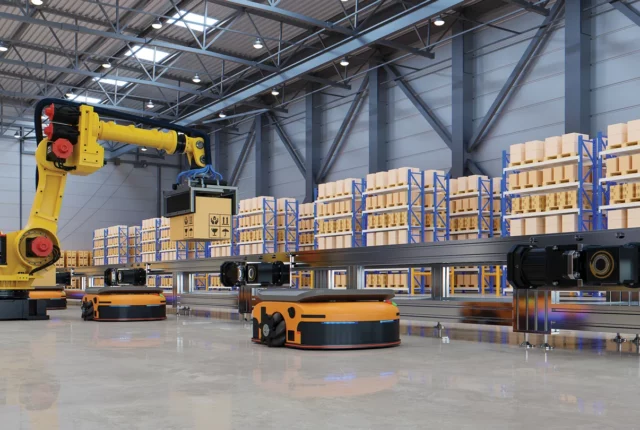
Automation and robotics are becoming foundational to warehouse logistics optimization, not experimental add-ons. Autonomous mobile robots, automated storage and retrieval systems, and smart conveyor technologies support scalable warehouse storage solutions that flex with peak seasons and promotional spikes. These technologies also allow for flexible inventory storage plans, enabling businesses to reconfigure layouts and workflows quickly as product mix, channels, and service promises evolve.
Strategically minded leaders are also using inventory to accelerate supply chain performance improvement and sustainability. Network redesign, packaging optimisation, and integrated warehousing and distribution models can cut emissions while lowering handling and transport costs. For deeper best-practice perspectives, resources from the Council of Supply Chain Management Professionals at https://www.cscmp.org/ offer valuable reference points for shaping future-ready inventory strategies.
Looking ahead, the most effective inventory strategies will blend technology with operating discipline and thoughtful governance. Executives should assess where outsourced logistics management services, robotics, and analytics can create leverage, then sequence investments around clear value cases rather than hype. To stay ahead of 2026 expectations, review your current operating model, benchmark performance, and engage supply chain experts to design a roadmap that turns inventory into a true competitive advantage.

Related posts
Labor Shortages in U.S. Warehouses: How Automation Is Filling the Gap
The warehousing industry across the United States is confronting significant lab

Understanding Warehousing Services in the USA: A 2026 Guide
Discover 7 key insights shaping warehousing services in the USA for 2026, from d

Short-Term vs Long-Term Storage: Choosing the Right Option
Compare short-term vs long-term storage for warehousing in US. Learn costs, flex
