




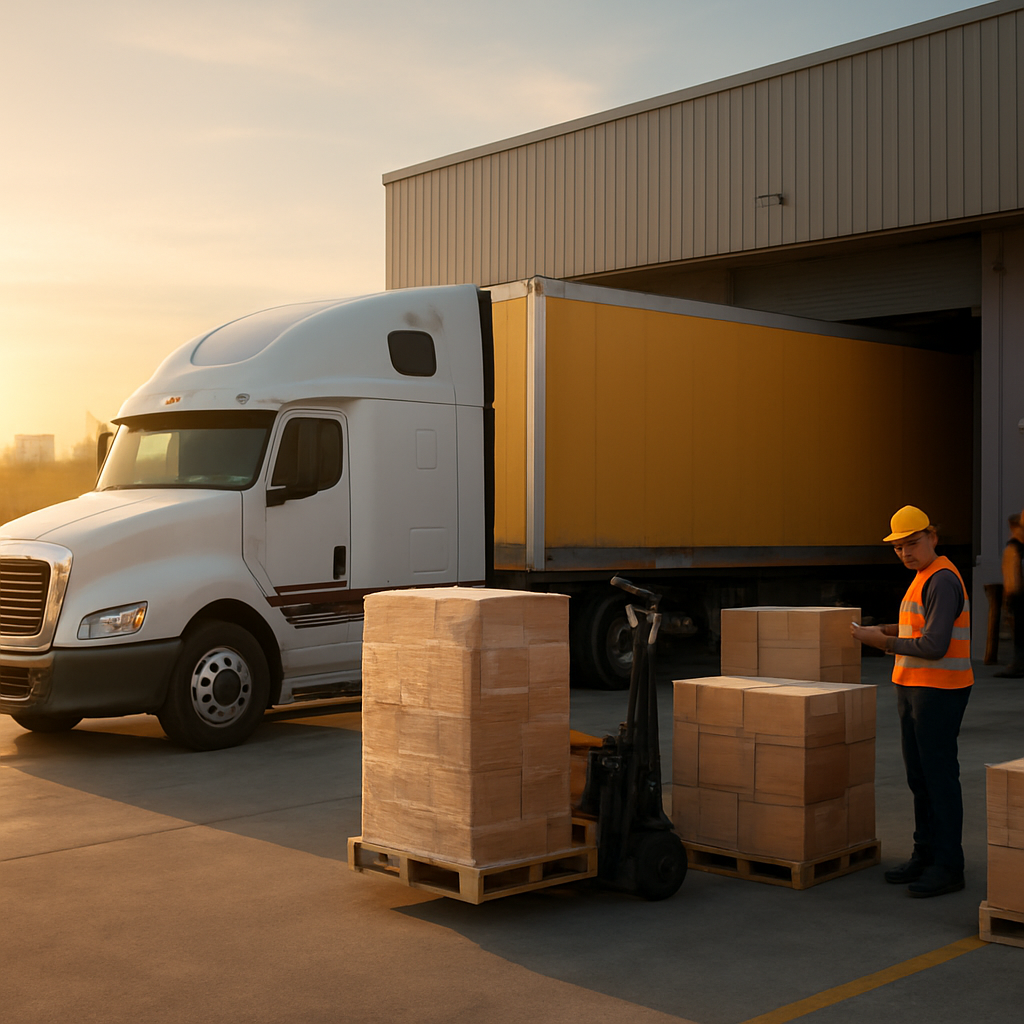
Full Truckload Shipping Explained: When to Choose FTL
Full Truckload shipping explained is no longer just a tactical choice about filling a trailer; it is a strategic lever for shippers navigating volatile US road freight markets. As e-commerce accelerates and networks strain under driver shortages, understanding when to choose Full Truckload (FTL) over LTL or intermodal is critical to protecting service, margin, and customer experience.
In 2024, shippers that treat FTL as a core strategic asset, not a last-minute booking decision, are the ones best positioned to balance cost, resilience, and customer promises.
At its core, Full Truckload (FTL) shipping dedicates an entire trailer to a single shipment, usually above 15,000 pounds or close to cube-out. The value goes beyond capacity: fewer touches reduce damage risk, direct routing improves transit time, and predictable linehaul rates simplify planning. For many freight transportation services users, the question is not “What is FTL?” but “When does FTL outperform my other options?”
Full Truckload Shipping Explained: Key Decision Criteria
Decision quality starts with volume, value, urgency, and risk profile. High-density or high-value freight that would span multiple LTL pallets often becomes cheaper and safer under full truckload transportation services. Time-sensitive product launches, retail promotions, and critical spare parts also benefit from the speed and control of a single-use trailer. When freight is sensitive, theft-prone, or temperature controlled, fewer terminals and cross-docks materially lower exposure.
Why FTL Matters Now in US Road Freight
The American Trucking Associations highlight that trucks move the vast majority of domestic freight by value, and capacity is tightening as driver shortages persist. In this context, shippers need Road Freight in US strategies that lock in reliable truckload logistics and shipping while balancing spot and contract exposure. Sustainability goals also matter; optimising trailer utilisation and consolidating into FTL can cut empty miles and emissions compared with fragmented LTL moves.
Total landed cost must drive modal choice, not just the linehaul rate per mile. When you factor in damage claims, appointment fees, and inventory carrying cost, FTL often outperforms seemingly cheaper cargo delivery options. Smart shippers model domestic freight transportation options lane by lane, comparing network-wide impacts on DC throughput, dock congestion, and customer OTIF performance. This is where integrated logistics and shipping solutions can reveal savings that do not show up in a simple rate table.
Network strategy is the real differentiator. Businesses that design lanes, consolidation points, and order cycles around road freight cargo delivery can shift repeat flows into stable FTL patterns. That creates a platform for interstate cargo delivery solutions, collaborative backhauls, and door to door cargo delivery where it makes economic sense. For authoritative market context, many leaders benchmark their assumptions against sources such as the American Trucking Associations at https://www.trucking.org/economics-and-industry-data.
Looking ahead, AI-driven planning and telematics will tighten the link between business logistics and shipping and customer expectations. Shippers that treat FTL as a strategic building block, not a commodity, will be best placed to orchestrate ground freight transportation solutions across modes and partners. Now is the time to review your truckload playbook, test alternative scenarios, and align FTL decisions with your broader Road Freight in US strategy. To explore how these principles apply to your network, engage with a trusted advisor and pressure-test your current freight model.

Related posts
Rail vs. Trucking in the U.S.: Choosing the Right Freight Option
Freight transportation is the backbone of American commerce. Whether it’s
Impact of E-Commerce Growth on Logistics Companies
The impact of e-commerce growth on Logistics companies in recent years has been
Highway to Growth: The Economic Impact of Road Freight
Road freight plays a crucial role in the economic development of countries aroun
