




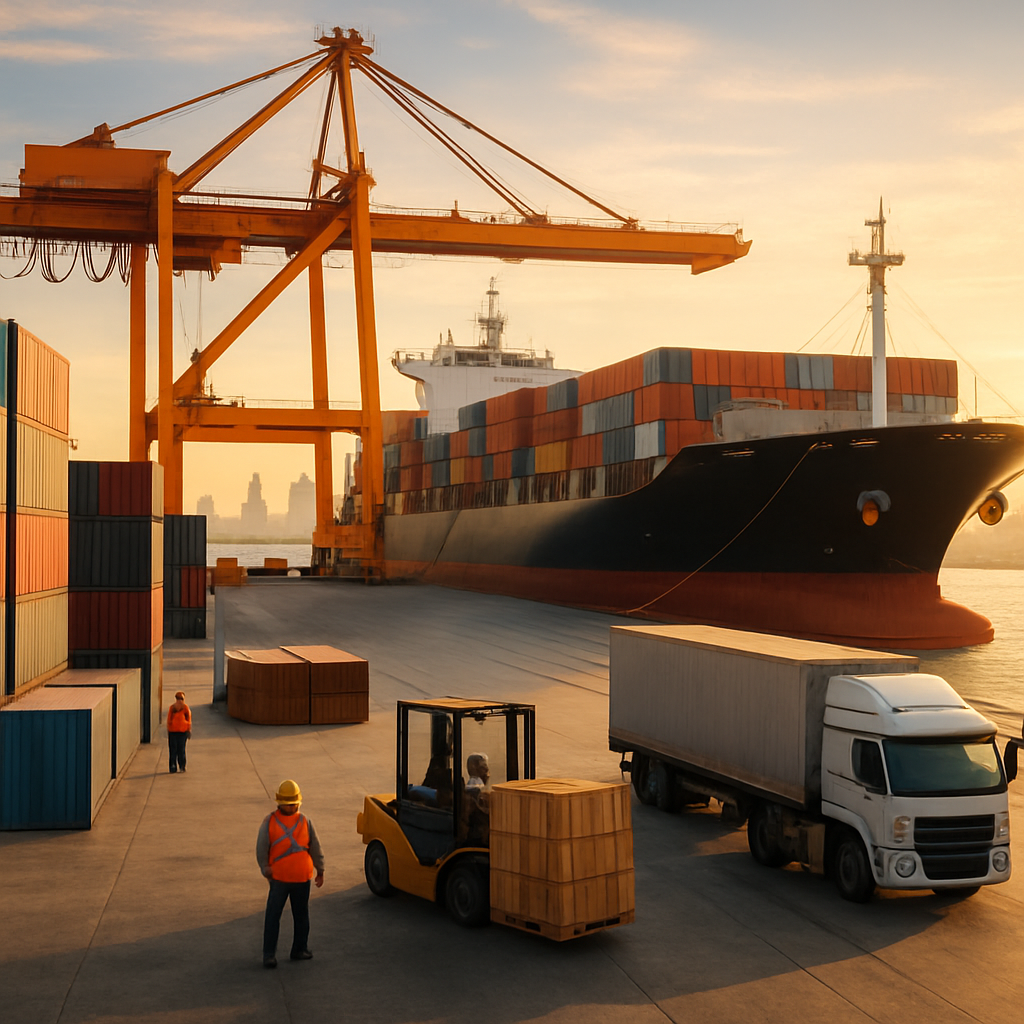
Coastwise Shipping Services: Streamlining Your Supply Chain
Coastwise shipping services, also known as cabotage, are gaining renewed attention as shippers search for more resilient and sustainable ways to move freight around the United States. By moving cargo between domestic ports instead of relying solely on highways and rail, businesses can unlock new routing flexibility and manage risk more effectively. For companies comparing interstate shipping services, coastwise options can complement existing networks rather than replace them, particularly for heavy, non-urgent, or bulk loads.
Understanding Coastwise Shipping Services
Coastwise shipping services involve transporting goods between ports along the same national coastline under cabotage rules such as the Jones Act. These regulations require U.S.-built, U.S.-owned, and U.S.-crewed vessels for movements between domestic ports, shaping capacity and pricing. In practice, these coastal freight solutions sit alongside truck and rail as part of a wider multimodal strategy. Shippers typically use them to handle steady, predictable flows while keeping faster modes available for urgent or high-value freight that demands shorter transit times.
Supply Chain Benefits of Coastwise Shipping Services
For logistics managers under pressure to cut emissions and manage costs, coastwise shipping offers several advantages. Moving freight by sea can reduce congestion on major highways, relieve stress on bridges and tunnels, and lower emissions per ton-mile compared with trucks. Many operators position their coastal shipping freight services as a way to handle large volumes with fewer vehicles and drivers. The mode also improves resilience by offering alternative routes when rail lines are disrupted by weather, labour issues, or infrastructure failures.
When Coastwise Shipping Makes Sense Versus Other Modes
Coastwise shipping is most effective on medium to long domestic corridors, including East, Gulf, and West Coast lanes where ports are well connected to inland networks. Compared with domestic interstate freight services by truck, transit times are usually longer but more predictable, making them suitable for non time-critical commodities, project cargo, and oversized loads. Businesses may compare interstate coastal freight options with rail on lanes where port access is strong and drayage distances are short. For some shippers, cost-effective coastal freight becomes a strategic way to stabilise budgets during periods of volatile fuel prices.
- Assess sailing frequency and port coverage to ensure schedules align with production cycles.
- Check transit reliability and integration with local delivery options at origin and destination.
- Review safety performance, environmental credentials, and regulatory compliance.
- Compare total landed cost, including drayage, storage, and handling charges.
- Evaluate technology capabilities such as real-time tracking and digital documentation.
Specialist advisors can help map freight flows and identify where interstate port-to-port shipping can de-risk operations or unlock savings. Many shippers explore Domestic & Coastal in US logistics as part of a broader review of domestic coastal logistics solutions and door-to-door interstate coastal models. For an overview of regulatory frameworks and safety standards, the U.S. Maritime Administration provides useful reference material at https://www.maritime.dot.gov. To understand whether coastwise shipping services fit your network, compare your current lanes, costs, and service needs, then speak with a logistics expert to review tailored coastal cargo delivery options and plan your next steps.

Related posts
China Trade Bottleneck Worse than the Suez Canal Fiasco?
When the giant container ship the MV Ever Given wedged itself across the Suez Ca

Supply Chain Storm Reaching Fever Pitch
The chief executive of consultancy Vespucci Maritime, says the supply chain stor
Hyundai Develop Rotor Sail Design For Eco-Friendly Ship
Based in South Korea, Hyundai has been developing a revolutionary rotor sail des
