




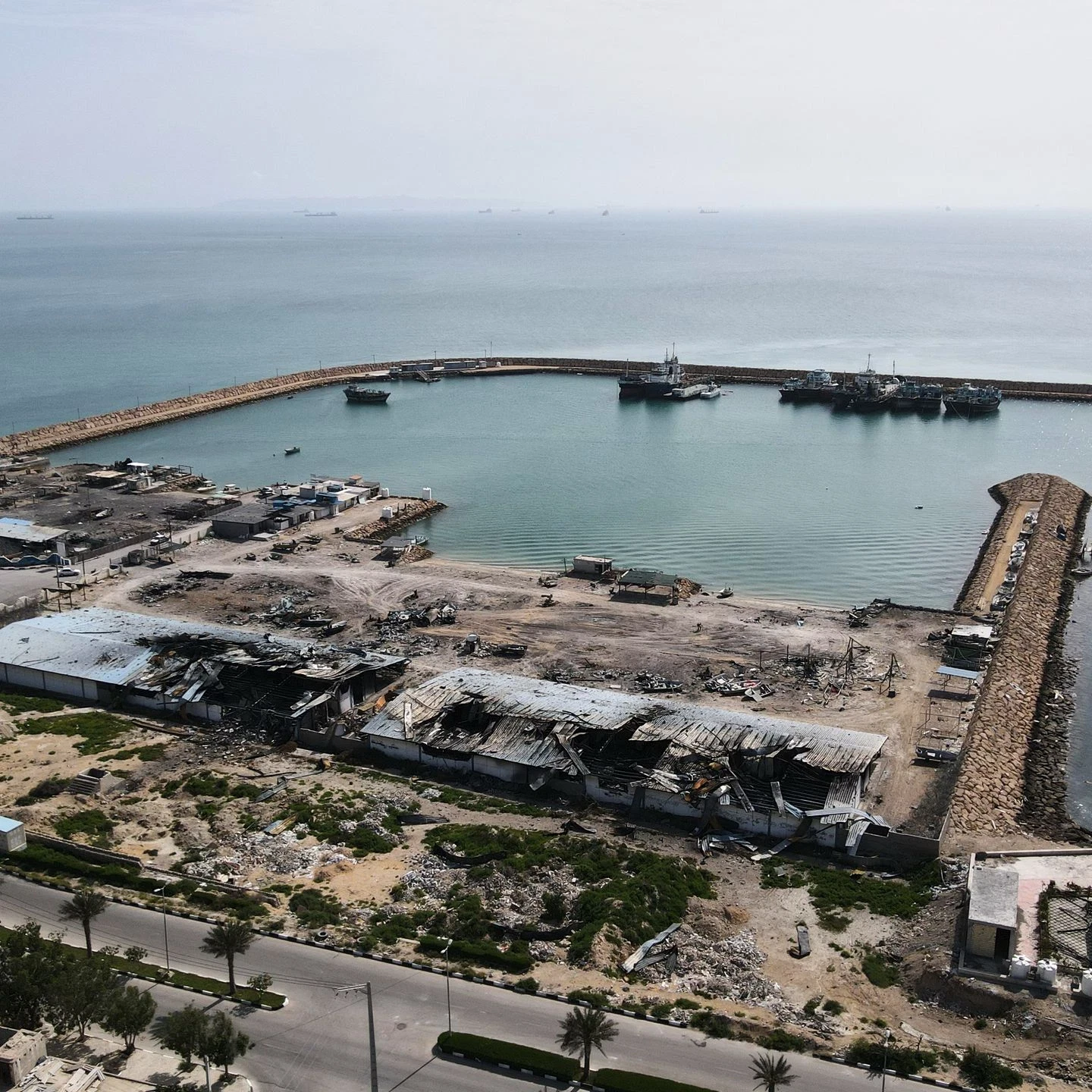
Hormuz Ceasefire Leaves Shipping in Wait-and-See Mode
Asian shipping stocks rallied on Monday as investors bet a tentative US-Iran deal could lead to the reopening of the Strait of Hormuz after 107 days of disruption, though industry experts warned any return to normal navigation will be gradual and far from guaranteed.
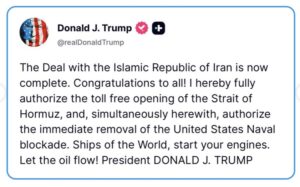
Reports emerged yesterday that Washington and Tehran have reached a ceasefire-linked agreement to reopen the strait and suspend tolls. The deal is due to be signed on Friday, but major operational questions remain over mine clearance, traffic control, insurance, security arrangements and the durability of the ceasefire.
The secretary-general of the International Maritime Organization (IMO), Arsenio Dominguez welcomed news of the end of the conflict.
“This signals a crucial return to peace, dialogue, multilateralism and diplomacy, and in particular, an important step toward restoring safety in this vital maritime corridor for seafarers and ships, as well as safeguarding the fundamental principle of freedom of navigation,” stated a release from the UN body.
Lars Jensen, chief executive of Vespucci Maritime, cautioned that the agreement should not be treated as a fait accompli. “It is not a final deal,” he noted, adding there would be 60 days to get the details in place. Jensen has been providing a daily update on the Hormuz shipping crisis since the war erupted on February 28.
For now, there is little evidence of commercial shipping returning at scale. Traffic through Hormuz remains almost non-existent today, with more than 500 vessels reported stranded and owners still awaiting clearer security guidance before committing ships to the waterway. So far today, just the LNG tanker Disha appears to have crossed.
Jakob Larsen, chief safety and security officer at BIMCO, urged cautioned. “The statements by the US and Iran are currently unclear and do not offer sufficient information regarding key aspects such as timings and safe routes,” he said. “Due to lack of details and a history of overly optimistic reassurances, we believe the security situation for the shipping industry remains volatile, and we still consider it very risky for ships to commence transits at this point.”
Dimitris Ampatzidis, maritime risk and compliance manager at Kpler, told the news today: “Even if the strait is considered reopened, this does not automatically mean traffic will normalise immediately. Vessels that have been delayed or held back would need time to exit, complete voyages, and potentially return for new loadings. That process could take roughly two to three months.”
INTERTANKO welcomed the US-Iran agreement, saying it should bring “welcome relief” to seafarers in the region. Managing director Tim Wilkins urged both governments to ensure Hormuz is “free from the threat of mines” and said navigation should return to the internationally recognised traffic separation scheme. Marine director Phillip Belcher added that, until the agreement is signed, ships needing to transit should take “a cautious approach” and conduct ship-specific risk assessments.
“The fundamental principle of freedom of navigation has been sidelined during the war, and many seafarers have regrettably been injured or lost their lives. As we now hopefully move towards peace, we must see a permanent return to vessels being able to pass through the Strait of Hormuz unimpeded without paying a toll or other clearance mechanism,” commented International Chamber of Shipping secretary-general Thomas Kazakos today.
Analysis suggests the biggest operational winners from a credible reopening would be LNG carriers, LPG/VLGCs, Gulf container and feeder services, and product tankers, all of which have suffered from high insurance costs, waiting time, rerouting, storage and transhipment expenses.
LNG stands to gain the most. Qatari exports have few realistic alternatives to Hormuz, and the strait normally handles more than a fifth of global LNG trade. LPG and Gulf feeder services would also benefit quickly as emergency routings and regional logistics costs unwind.
The clearest earnings losers would be crude tanker owners, especially VLCCs in Middle East Gulf spot trades. The crisis has supported freight volatility, war-risk premia and tight tonnage availability. A credible reopening could sharply reduce those earnings supports over the coming weeks.
Dry bulk would see a smaller global impact, though fertiliser-related trades and Gulf-exposed tonnage would benefit from the removal of delays and trapped ships.
The human cost of the crisis has continued to mount. Another Indian seafarer, 35-year-old Nishanth Uirthanathan, died last week from medical complications onboard the Celestial tanker at Oman’s Duqm port,. His death followed the killing of three Indian seafarers onboard the Settebello in a US military strike off Oman.
India’s Directorate General of Shipping has since advised recruitment and placement agencies to restrict the deployment of Indian seafarers to conflict areas, including the Gulf region and waters around Hormuz, until further notice. Emergency crew changes may still be carried out with crew consent.
While the proposed ceasefire around the Strait of Hormuz offers a measure of optimism, the shipping industry remains firmly in wait-and-see mode as operators assess whether stability will hold. Sea freight stakeholders are continuing to monitor the situation closely, weighing potential risks against the need to maintain efficient trade flows through one of the world’s most critical maritime corridors. Until confidence returns, flexibility and contingency planning will remain essential components of supply chain resilience.
Source: Hormuz ceasefire

Related posts
U.S. Air Cargo Advance Screening Data Requirements Effective Nov. 12
Effective November 12: New mandatory data elements for air freight shipments des
Steel and aluminum next in Trump’s tariff push
China’s retaliatory tariffs on some American goods came into effect on Monday,
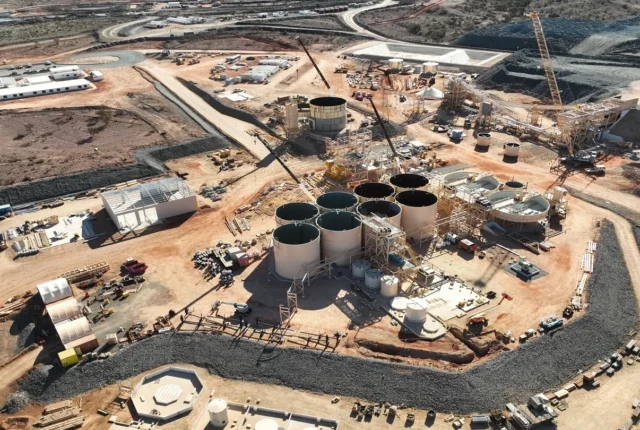
12 Dangerous Goods (DG) energy storage units from China to the Bellevue Gold Mine site in Sir Samuel, WA
Across the Ocean Shipping is proud to announce the successful delivery of 12 Dan
